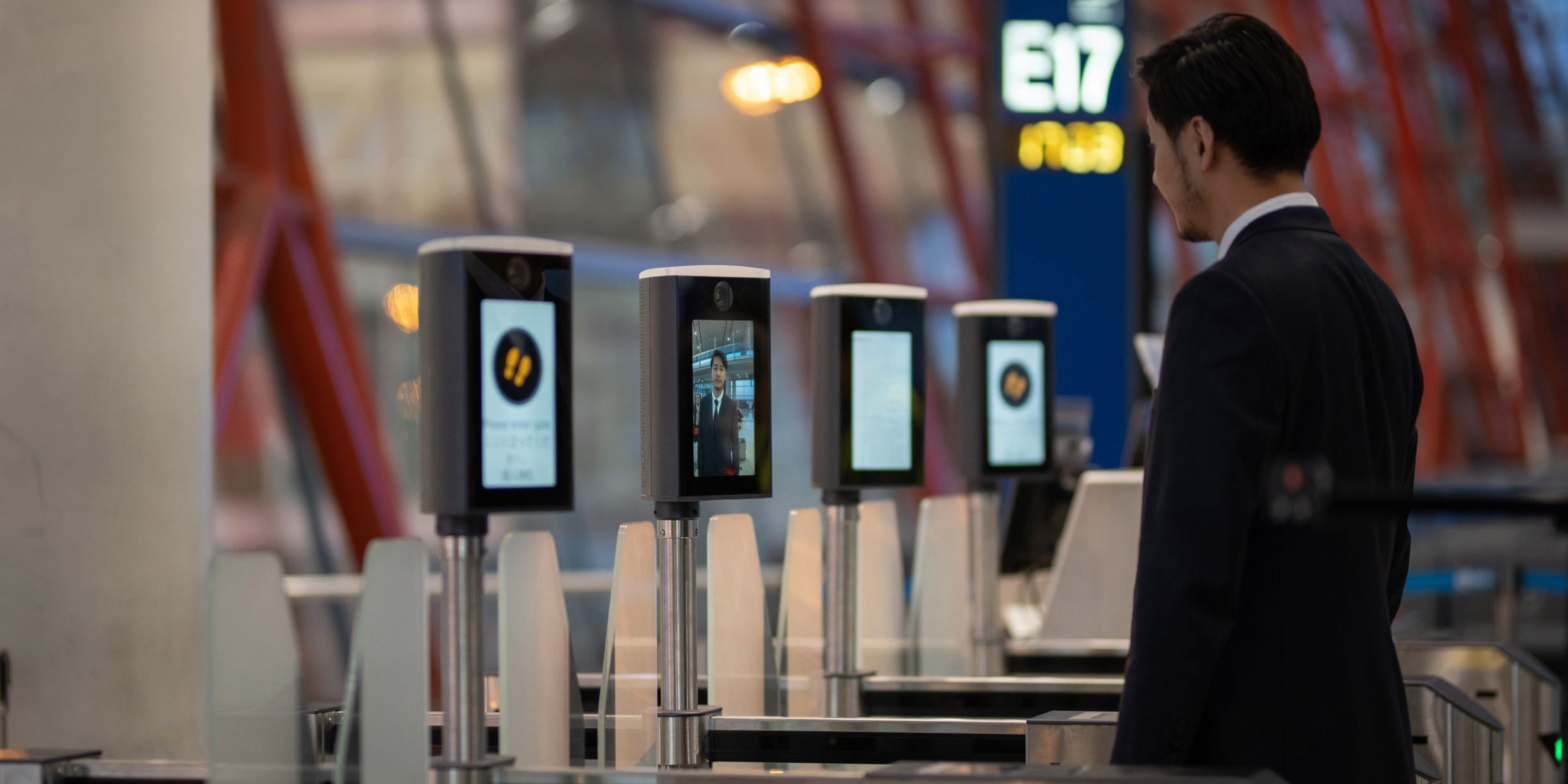
ABC eGates will remain the most valuable automated equipment category, but biometric enrolment pods and totems are forecast to grow fastest as border agencies adopt a wider mix of automated and assisted processing.
September 23rd 2026, 15:00 British Summer Time (BST)
London.
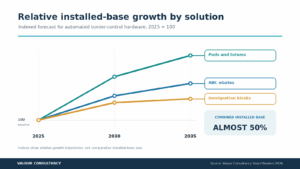
Border modernisation over the next decade will extend well beyond the installation of additional eGates, as authorities invest in a wider mix of self-service and assisted-processing technologies. According to a new report from Valour Consultancy, the combined global installed base of automated border control (ABC) eGates, immigration kiosks, and biometric pods and totems is forecast to grow by almost 50% between 2025 and 2035.
“Smart Borders 2026: The Future Evolution of Land, Sea and Air Borders” finds that whilst ABC eGates are the most widely deployed in terms of geographic coverage, and account for the greatest proportion of annual revenues, there are presently more immigration kiosks, and pods and totems, in use. While the installed base of ABC eGates is forecast to grow by 44% over the next ten years, biometric pods and totems are expected to grow fastest, increasing by 77% over the same period. These figures point to continued strong investment in automation and modernisation being made by governments and border agencies.
The contrasting growth rates reflect varying levels of market maturity, the smaller existing base of pods and totems, and the distinct roles these technologies play in border processing. An ABC eGate can automate the clearance transaction for an eligible traveller, reducing pressure on staffed counters and increasing throughput. Immigration kiosks move elements such as declarations, document reading and biometric capture into a self-service process. Pods and totems instead augment officer-led processing, improving the consistency and quality of enrolment while allowing the border officer to retain control over the clearance decision.
“The eGate remains the most recognisable symbol of an automated border, but it is only one part of the current investment cycle,” said John Devlin, author of the report at Valour Consultancy. “Border agencies are deploying a wider mix of self-service, biometric enrolment and assisted-processing equipment, connected to increasingly sophisticated identity and border management platforms. Officer-led processing will nevertheless remain central, meaning the fastest-growing technology will not necessarily be the one that automates the entire transaction.”
The range of approaches also gives countries options suited to different priorities and levels of maturity. Advanced markets are extending automation to wider traveller groups and improving the integration between checkpoints and national systems. Implementation of the European Union’s Entry/Exit System (EU-EES) has driven demand for biometric enrolment equipment across air, land and maritime borders. In parts of Asia and the Middle East, governments are pursuing passportless processing, expanding eGate eligibility and introducing new approaches at land borders. Other countries are strengthening the foundations through ePassports, counter equipment, advance passenger information (API) and core border management systems before introducing automation at greater scale.
These developments form part of several overlapping technology cycles. Existing equipment does not disappear when a new approach is introduced: manual and assisted inspection, self-service enrolment, automated clearance and advance risk assessment increasingly operate together. At the same time, growth in front-end hardware is being accompanied by investment in border management systems, automated biometric identification systems, entry-exit records and API-PNR platforms that enable traveller data to be collected earlier and used more effectively.
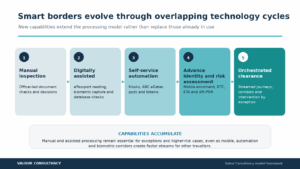
Further change is expected as agencies introduce mobile enrolment, digital travel credentials (DTCs) and biometric corridor concepts. These approaches are unlikely to replace existing equipment wholesale. Valour Consultancy expects border processing to become increasingly tiered, with travellers directed into different clearance streams according to their identity, eligibility, available information and assessed risk. Conventional ABC eGates, kiosks, biometric enrolment units and officer-led processing will therefore continue to operate alongside newer, less visible forms of automation.
“The future border is unlikely to be entirely manual or entirely automated,” Devlin added. “Mobile enrolment and biometric corridors could make clearance almost invisible for some travellers, while kiosks, eGates, biometric enrolment units and officers continue to handle other groups and exceptions. This creates an opportunity for companies capable of orchestrating those different streams, using traveller and operational data effectively.”
Valour Consultancy’s “Smart Borders 2026: The Future Evolution of Land, Sea and Air Borders” report examines the installed base, annual demand and ten-year outlook for six hardware categories across air, land and maritime borders. It also assesses country-level adoption of border management, biometric identity, entry exit and API-PNR platforms, together with the drivers, barriers and competitive environment shaping the market.
About Valour Consultancy
Valour Consultancy is an award-winning provider of high-quality market intelligence and consultancy services. “Smart Borders 2026: The Future Evolution of Land, Sea and Air Borders” is the latest update to the firm’s highly regarded airports and borders research portfolio and a key resource for those seeking a deeper understanding of the increasing adoption of automation, biometrics, digital identity at border checkpoints, and and advanced data platforms for management and orchestration. Developed with input from more than 30 companies and agencies across the border ecosystem, the study includes in-depth commentary on market issues, technology trends and the competitive environment, while market estimates and forecasts are contained in over 200 tables and charts. Sample pages, as well as a report scope, can be requested here.
Sign up to our free newsletter to receive all the latest updates and market intelligence insights.
Media Contact
John Devlin