Introduction
Recently, I was listening to Morgan Housel, the renowned financial self-help author of The Psychology of Money. Morgan’s podcasts are information-packed, last 15 minutes, and leave you pondering the assumptions for hours afterwards.
The podcast I was digesting was The Art and Science of Investing. Housel argues that successful investing is only partly about evidence and analysis. The other half is how companies make people feel, the strength of their brands, and the confidence customers place in them.
Morgan starts with some sage advice Steve Jobs (Apple renowned for its perfect balance of art and technology) gave to Bill Gates: Microsoft’s products would be better, if Bill had taken LSD.
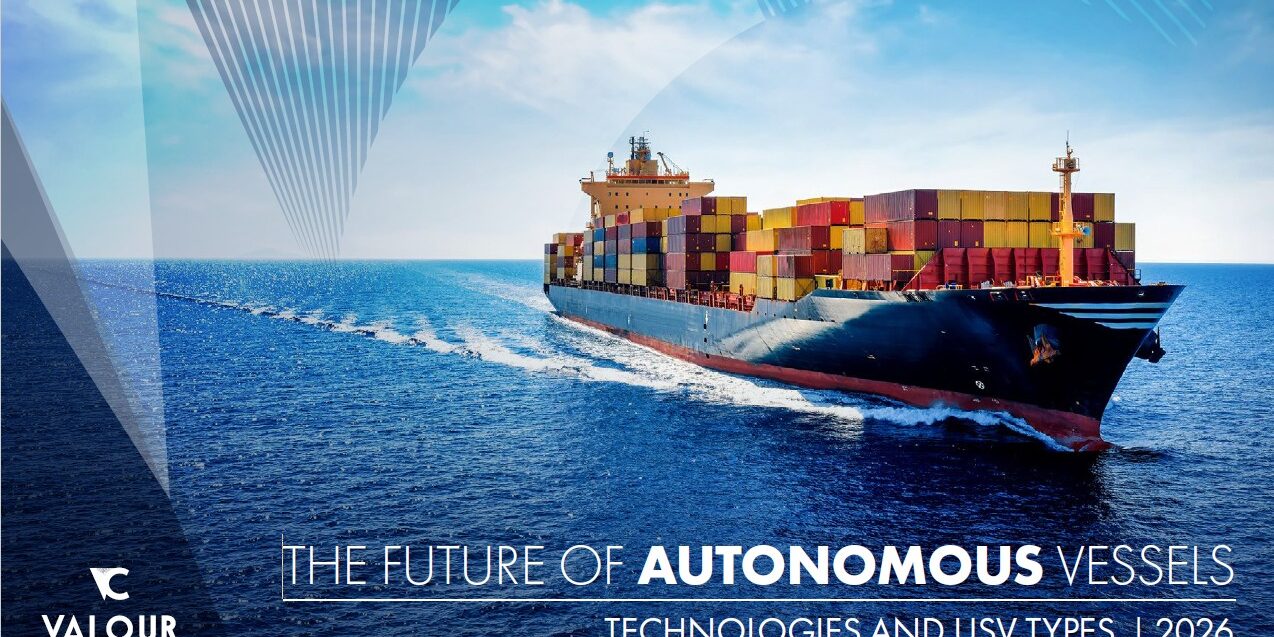
While writing my latest report, “The Future of Maritime Autonomous Vessels: Technologies and USV Class”, I found myself asking a different question. If I were investing my own money, which parts of the autonomous vessel ecosystem would excite me the most?**
**No LSD was consumed during the production of the report or this article
Strategic Takeaways
These are my latest takeaways.
- Degree 1 Is Paying the Bills Today
Whilst fully autonomous vessels attract the headlines, Degree 1 autonomy represents the largest commercial opportunity today. Shipowners are prioritising technologies that enhance safety, improve decision making and reduce operating costs without removing the crew from the bridge.
- Degree 2 Will Drive the Next Wave of Growth
Over the next decade, supervised autonomy becomes the industry’s commercial sweet spot because it delivers many of the operational benefits of autonomy while remaining commercially and regulatorily achievable. As regulations mature and confidence grows, remote supervision and higher levels of automation are expected to generate the largest share of market revenues by 2035.
- USVs Are Leading the Commercialisation of Autonomy
Uncrewed Surface Vessels are proving that autonomy already works in real-world operations. From offshore inspection and hydrographic survey to defence and environmental monitoring, USVs are creating sustainable commercial revenues long before fully autonomous merchant ships become commonplace.
- Connectivity Is Becoming Mission-Critical Infrastructure
Reliable communications are evolving from a crew welfare service into an operational necessity. Multi-orbit satellite networks, resilient connectivity and low-latency communications will underpin remote operations, fleet intelligence and higher levels of vessel autonomy.
- Software Will Capture an Increasing Share of Value
As autonomy matures, value shifts beyond hardware towards software, data and recurring services. Autonomy platforms, remote operations software, AI decision support and fleet intelligence are expected to become some of the fastest-growing and highest-margin parts of the value chain.
What This Means for Different Parts of the Industry
Autonomy Software Companies (Orca AI, Avikus, Robosys, Captain AI)
Perhaps the biggest winners over the next decade are the companies writing the software rather than building the ships.
Companies such as Orca AI, Avikus, Robosys Automation and Captain AI are quietly changing how vessels operate. Rather than replacing crews overnight, they are helping bridge teams make better decisions, avoid collisions, automate repetitive navigation tasks and ultimately build confidence in higher levels of autonomy. Furthermore, the real competitive advantage is unlikely to come from collision avoidance alone, but from continuously learning AI platforms that improve with every voyage.
Our report suggests these companies should continue prioritising commercial shipping over chasing futuristic demonstrations. Degree 1 autonomy remains where purchasing decisions are happening today, while Degree 2 offers the largest long-term commercial opportunity. Winning customer trust, proving safety and integrating with existing bridge systems may ultimately matter more than developing ever more sophisticated algorithms.
Integrated Maritime Technology Leaders (Kongsberg, Wärtsilä, ABB, Furuno)
If software companies are providing the brains, the established maritime suppliers already own much of the nervous system.
Companies including Kongsberg Maritime, Nacos Marine, Wärtsilä, ABB and Furuno Electric have one enormous advantage: decades of installed equipment across the global fleet.
Rather than trying to reinvent shipping, they are steadily adding intelligence to navigation systems, bridge equipment, propulsion, automation and remote operations. Their opportunity is less about selling individual autonomous features and more about becoming the platform upon which future autonomous services operate.
Unlike many software start-ups, Kongsberg is already sit at the heart of thousands of vessels. They don’t need to persuade owners to adopt entirely new ecosystems; they simply need to make existing ones progressively smarter.
Our report recommends that these companies continue expanding integrated ecosystems that combine sensors, navigation, automation, connectivity, and software. Shipowners increasingly want complete solutions rather than assembling multiple standalone products.
Satellite Operators and Connectivity Providers
Perhaps the biggest surprise from the research is that connectivity is no longer supporting autonomy; it is becoming part of autonomy itself.
Satellite operators and maritime service providers increasingly sit at the centre of autonomous operations. Whether providing resilient command links for remotely supervised vessels, transmitting sensor data, enabling predictive maintenance or synchronising fleet intelligence, communications have become operational infrastructure.
For satellite operators, the report reinforces three priorities:
- continue investing in multi-orbit architectures rather than treating GEO and LEO as competing technologies;
- optimise networks for reliability and resilience rather than simply advertising headline bandwidth;
- position connectivity as part of the autonomy value proposition, not simply crew welfare.
As vessels become increasingly connected, the quality and resilience of communications may become every bit as important as the AI making navigational decisions.
USV Developers (Saildrone, XOCEAN, ACUA Ocean, Ocean Aero, Zero USV)
If anyone still doubts whether autonomous vessels can generate revenue today, they should spend more time looking at the commercial USV market.
Companies including Saildrone, XOCEAN, ACUA Ocean, Ocean Aero and Zero USV have moved beyond demonstrations into genuine commercial operations across offshore energy, hydrographic surveying, environmental monitoring, security and defence.
Rather than waiting for regulations governing fully autonomous merchant vessels, these companies are proving the commercial model today.
Many USV operators are effectively becoming “Maritime as a Service” businesses, selling completed missions rather than vessels.
Our report finds that future competitive advantage will depend less on hull design alone and more on software, remote operations, mission management, and recurring service revenues. In other words, the vessel is becoming the hardware platform; the long-term value increasingly sits in the services wrapped around it.
Shipowners and Vessel Operators
For shipowners, perhaps the most reassuring conclusion is that autonomy is not an all-or-nothing decision.
Few operators will jump directly from conventional vessels to completely crewless ships. Instead, adoption is likely to occur gradually through incremental investments that improve safety, reduce workload, optimise fuel consumption and enhance operational awareness.
That means the question is no longer “Should we adopt autonomy?”
Instead, it becomes:
“Which autonomous capabilities deliver measurable value today?”
and
“Which fit naturally within our wider fleet strategy?”
That is a much easier investment decision. And links back to the balance between the science and art of investing rather than it simply being a binary yes or no.
Final Thoughts
After spending months researching the market, one conclusion became increasingly obvious.
The autonomy race is not being won by the companies making the boldest claims. It is being won by those quietly solving practical operational problems.
The headlines will continue focusing on fully autonomous ships crossing oceans without crews. Those demonstrations are important because they stretch the industry’s imagination. But the commercial reality is considerably less dramatic and considerably more valuable.
Degree 1 autonomy is already improving safety and productivity. Degree 2 is likely to become the industry’s largest commercial opportunity over the next decade. USVs are proving that autonomous operations can already generate sustainable revenues today.
The market is gradually shifting from selling hardware to selling intelligence.
Ironically, autonomy could become one of Starlink or Amazon Leo‘s biggest long-term growth drivers. Every additional autonomous capability increases the value of resilient, low-latency connectivity.
Meanwhile, software is steadily becoming the highest-value layer across the autonomy stack.
Perhaps the biggest lesson is that maritime autonomy is no longer a technology story.
It has become a commercial story. And those are often the ones worth paying closest attention to.
Five Strategic Conclusions
- Today’s market is far more commercial than the headlines suggest. Degree 1 autonomy is already delivering measurable operational value and generating the majority of revenues.
- The next decade belongs to supervised autonomy. Degree 2 strikes the balance between technological capability, regulation and commercial practicality, making it the largest long-term growth opportunity.
- USVs are proving the business case first. They are commercialising autonomy years ahead of deep-sea merchant shipping and demonstrating where recurring revenues can be generated.
- Connectivity has become critical infrastructure. Multi-orbit satellite communications are now as fundamental to autonomous operations as sensors and navigation software.
- The winners will build ecosystems, not individual products. The greatest value will come from companies that successfully combine software, connectivity, remote operations and services into integrated commercial solutions.
If you are interested in purchasing a copy, please click here to access our report proposal, which includes:
- Introduction to the report
- Key questions answered
- Proposed report content
- Report scope
- How to access the report