Introduction
Over the UK bank holiday weekend in April, I travelled to Luxembourg and experienced the EU’s European Union Entry/Exit System (EES) for the first time, with my entry and exit recorded electronically to enable real-time tracking of movements. This is something I have been taking note of with our new report, “Smart Borders 2026: The Future of Land, Sea & Air Borders” publishing this month. This blog outlines the challenges I encountered at the border and considers how these issues may be addressed ahead of the busy summer travel season.
Challenges at the Border
I boarded the first flight to Luxembourg on Friday, landing at approximately 8:30am. Although the flight was relatively empty, with around 70 fellow travellers at most, the arrivals process was far from quick or straightforward. Upon arrival, we were directed into two queues and advised to wait for further instruction, causing uncertainty and frustration among travellers.
After approximately 30 minutes, we were guided towards a bank of 10 immigration kiosks, provided by Veridos, for biometric enrolment into the system. While in the queue, I repeatedly heard variations of “what’s happening?”, “what are we doing?”, and “why do we need to enrol?” from confused travellers; highlighting the lack of public awareness and messaging surrounding the system, despite its rollout being planned since 2020.
When I finally reached the kiosks, three of the ten available units were disconnected or out of service. This made an already time-consuming process even longer, as travellers frequently approached these kiosks only to be redirected back to the queue or towards an operational unit.
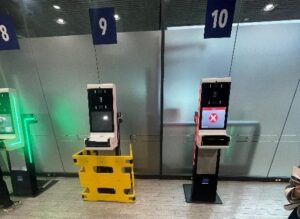
Figure 1: Disconnected/out of service kiosks at Luxembourg Airport
After waiting my turn, I approached a kiosk, answered the required questions, scanned my passport, and completed facial biometric capture. However, when attempting to scan my fingerprints, I was notified that the function was not operational and would need to be completed at the desk. Despite this, the agents assisting near the kiosks were helpful and approachable, providing guidance and support to the many confused and overwhelmed travellers.
After using the kiosk, I joined another queue, which took approximately 20 minutes before reaching a border control booth. I informed the officer that my fingerprint capture had been unsuccessful and was instructed to place my fingers on the built-in scanners. After two failed attempts, my fingerprints were successfully captured on the third try. I was then asked to face the secunet easytower for facial capture, followed by a few routine questions about my trip, before being granted entry into Luxembourg. Despite some initial friction during enrolment and entry, the exit process offered a more practical view of how the system is likely to operate once travellers are fully onboarded. In this instance, the contrast was clear: what felt complex on arrival became notably more seamless on departure.
From my perspective as a passenger, the exit experience was quicker and more intuitive, while for border authorities, the system enabled accurate, real-time confirmation of my departure. This not only improves operational efficiency but also supports wider objectives around border integrity, particularly in addressing visa overstayers. With my flight arriving at a Tier 3 airport that handled 5.1 million passengers in 2025, yet still experiencing queue times approaching an hour early in the morning, it is reasonable to expect significantly greater delays at major tourist destinations during the summer travel season; particularly in Spain, Portugal, France, and Italy. Following the full-scale operational launch for 100% of travellers at all Schengen border checkpoints from the 10th of April, increased delays, queues, and passenger frustration at EU borders are likely. This additional pressure on border agencies is already seeing some variation from the intended process, with some sites having to seek alternatives to cope with high demand and some countries (temporarily) opting out, further undermining it.
Addressing Pain Points Moving Forward
With my first experience of the EU’s EES far from seamless, several improvements could help streamline the process. Greater public awareness, delivered through targeted campaigns across TV and social media, as well as additional signage and information displayed in the airport or announcements mid-flight by the airline to reduce confusion and support a smoother enrolment experience. Improving system and process reliability, alongside expanding kiosk availability, would also help alleviate queue times by increasing throughput.
Beyond this, wider implementation and promotion of the Travel to Europe app for pre-enrolment could shift much of the process away from the border, with only fingerprint capture remaining on-site. However, our understanding is that many countries have a preference for enrolment and data capture to be done in-person, on-site. Similarly, although not particularly convenient, enabling enrolment at controlled environments such as Visa Application Centres would reduce pressure at border checkpoints and improve process efficiency and the traveler experience.
Conclusion
With full-scale deployment and the summer travel season approaching, several operational challenges remain. While the long-term vision for digitalised EU borders is promising, its success will depend on proactive planning and coordinated implementation, rather than reactive responses to emerging issues.
If you would like to have a deeper discussion or share your thoughts on this topic, feel free to reach out to me via my email address: shubh.karbhari@valourconsultancy.com
You may also be interested to read my previous article on the subject: “EU-EES: Inside the €915 Million Border Overhaul — What Comes Next for Europe’s Entry/Exit System?”

Shubh Karbhari, Market Research Analyst