Container ship receiving satellite bandwidth

SpaceX’s Next Maritime Challenge Isn’t Winning More Ships

Introduction Commercial shipping has already embraced Starlink. The next challenge is convincing the world’s largest fleet operators that bandwidth alone is no longer enough. Wall Street spent last week analysing SpaceX’s latest quarterly earnings. Investors focused on revenues of $7.8 billion, 12 million Starlink subscribers and Elon Musk’s ambitious target of generating $100 billion in…

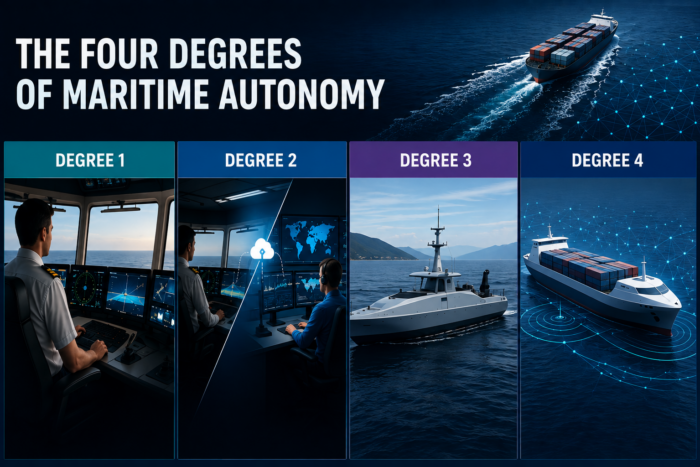
4 Degrees of Vessel Autonomy

The Four Degrees of Maritime Autonomy: Why the Industry’s Future Is More Evolution Than Revolution

Introduction Ask someone to picture an autonomous vessel, and they will probably imagine a crewless container ship crossing the Pacific with nobody on board, guided entirely by AI. It is an image that captures headlines and fuels conference debates. The reality, however, is considerably less dramatic and considerably more interesting. History shows that technological revolutions…

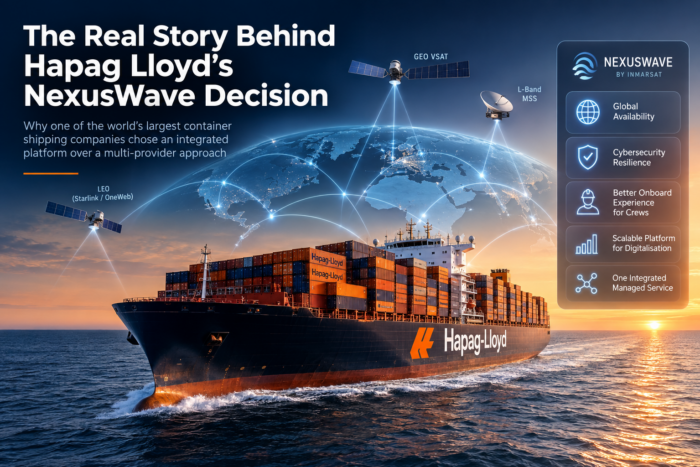
Hapag Lloyd container ship illustrating the company's decision to adopt Inmarsat NexusWave hybrid maritime connectivity across its fleet

The Real Story Behind Hapag Lloyd’s NexusWave Decision

Introduction When Hapag-Lloyd announced that it would deploy Inmarsat’s NexusWave across its fleet earlier this month, most headlines focused on another connectivity contract. They missed the bigger story. The announcement represents a significant win for Inmarsat and perhaps an even more important signal for the wider maritime connectivity market. After more than 21 months of…

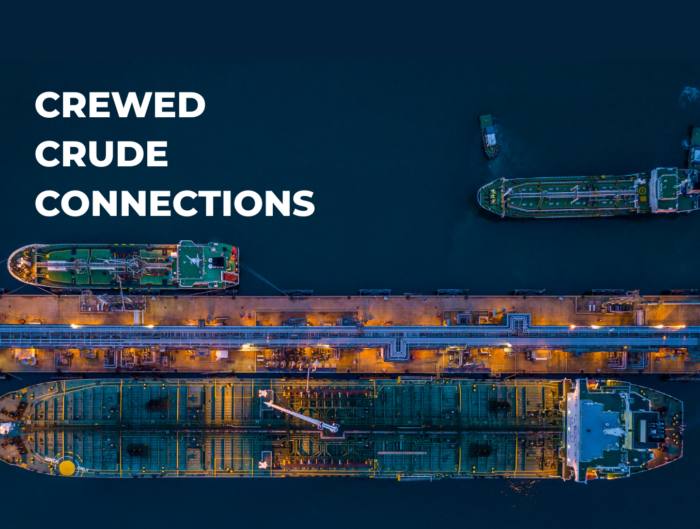
Crewed Crude Connections

Introduction Newsreaders frequently state that around 90% of the world’s goods are transported by sea. This equates to commercial merchant shipping transporting approximately 11–13 billion tonnes of cargo during 2024. Dry bulk makes up the largest segment, accounting for roughly 4.9 billion tonnes (about 48%) of all seaborne trade and is typically measured by weight.…

A Future Automated Port

That’s an Offload on My Mind

Introduction Much of the discussion surrounding automated and smart shipping focuses on navigation, propulsion, remote operations and artificial intelligence. Yet one of the industry’s biggest opportunities to improve safety, efficiency and profitability lies somewhere far less glamorous: cargo handling. For many commercial applications, automated shipping is perhaps the more appropriate term than autonomous shipping. While…

Digital Ship

From Maritime IT Specialist to Digital Swiss Army Knife: MarPoint’s Reinvention for the Connected Shipping Era

Introduction One of the beauties of our work as market intelligence analysts is the opportunity to interview fascinating people and companies. Better still is speaking to the same companies over many years and seeing how their businesses evolve as technology, competition, and customer requirements change. In the autumn of 2022, Valour Consultancy interviewed MarPoint, then…

The Evolution of Inmarsat Maritime: NexusWave Surpasses 1,000 Ships and Beyond

Introduction In 2024, Inmarsat Maritime announced the launch of a new bonded hybrid connectivity service, NexusWave. The rapid uptake of LEO broadband services within the commercial maritime certainly caught many people by surprise. However, Inmarsat Maritime views its arrival as complementary – a catalyst for accelerating hybrid, multi-orbit solutions. As the summer solstice started in…

Freight rates, freight rates going so fast

Introduction The above title is understood as the interaction between supply and demand in the maritime transport sector. Supply will lag behind capacity and demand and rates will rocket, then it will catch up, then it will oversupply and rates will fall. This happens fairly regularly except for those spanners thrown in the works (mostly…