Introduction
Newsreaders frequently state that around 90% of the world’s goods are transported by sea. This equates to commercial merchant shipping transporting approximately 11–13 billion tonnes of cargo during 2024.
Dry bulk makes up the largest segment, accounting for roughly 4.9 billion tonnes (about 48%) of all seaborne trade and is typically measured by weight.
Liquid bulk (mostly crude oil and petroleum) is the second largest, followed by containerised goods. However, tonne-miles have increased significantly while volumes are only slightly up.
Extra-regional trade accounts for around 7.5 billion tonnes macroeconomic factors (or, put less diplomatically, old men going to war and Mother Nature reminding everyone who is really in charge).
Structural, cyclical and policy factors underpin this deceleration, encompassing the structural weakening of trade-to-GDP links, a slowdown in global value chain expansion, repeated economic shocks, rising trade barriers and policy instability, and geopolitical fragmentation according to UNCTAD, 2024a; WTO, 2024.
This is a rather fancy way of saying things are tough and will stay tough until a new world order is established. Historically, this normally takes a couple of decades or more but, generally, at least one generation (25 years).
Stockpiles of almost every commodity, all over the world, but especially USA, China, India, Russia, Japan and Europe (the big consumers) are depleted.
As we head toward ‘interesting times’, how can automation assist in navigating both the need to restock against increasing geopolitical uncertainty, and furnish enough growth to satisfy a rapidly stabilising and ageing world population.
Automatic Docking
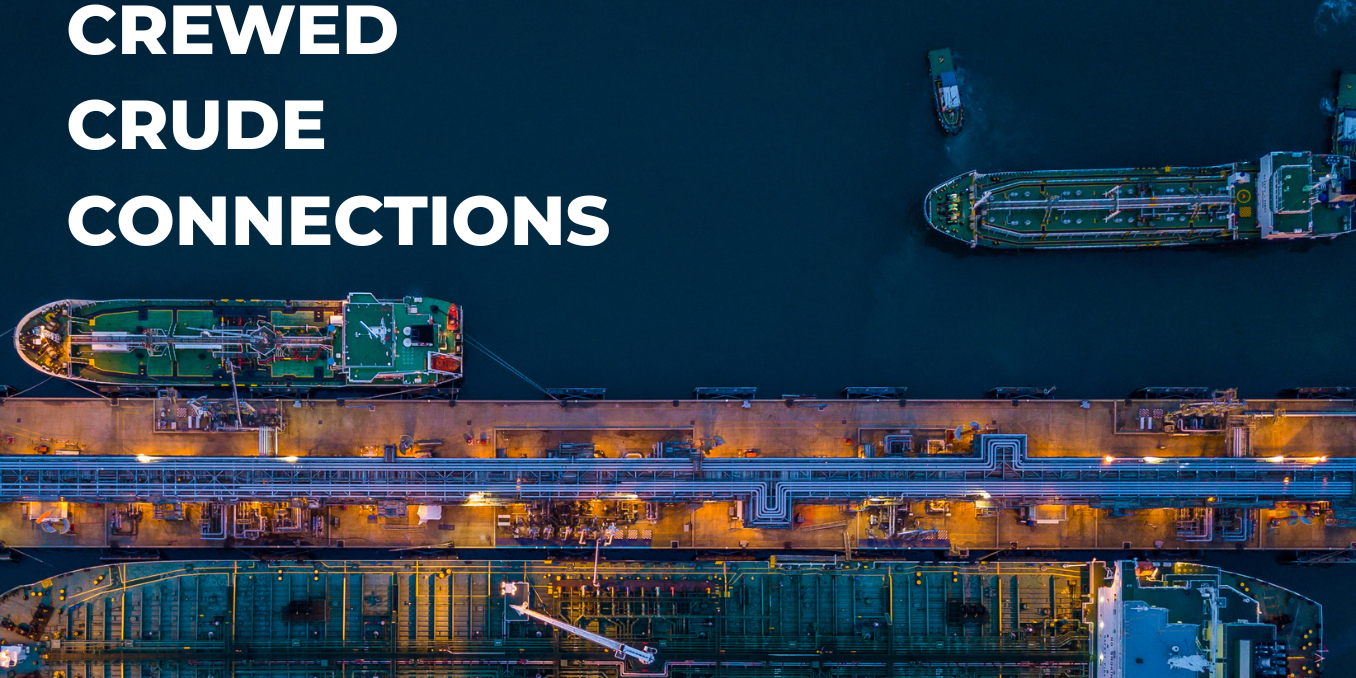
The majority of crude oil that is transported internationally is via VLCCs. These tankers typically haul 2 million barrels or 300,000 metric tonnes, which gives them a fairly good economic footprint. Large vessels do present significant challenges during mooring and loading/unloading, resulting in big challenges for automation.
The objective of automation is not simply to remove people from the process. Instead, it is to improve safety, reduce operational delays and increase terminal throughput. Every additional hour a VLCC spends manoeuvring, waiting for tugs or alongside a berth is time that cargo is not moving and assets are not generating revenue. Automation therefore aims to make complex marine operations safer, faster and more consistent, while allowing experienced personnel to supervise increasingly sophisticated digital systems rather than undertaking every task manually.
Getting a VLCC alongside a loading terminal or quay is no small operation and normally takes three, four or more powerful harbour tugs. Shore-controlled harbour tugs, albeit smaller in size, are already in operation in some ports such as Singapore. Depending on the construction specification for the VLCC, there are four, six or eight reinforced points on the hull, clearly marked, where a tug can push against and there are specific areas where a tug may not push (like shell doors or delicate internal machinery areas) where a tug pushing would cause damage, and these are also marked.
It can be simpler. Single Buoy, or Point, Mooring is a little easier. This is a floating jetty/buoy anchored offshore, often positioned a few kilometres from the shore facility. The VLCC attaches to the buoy, frequently bow-to, and weathervanes to react to wind and waves. This system was first implemented by Sarawak Shell in 1959 and their chief engineer, an uncle of one of Valour’s founders, was instrumental in implementing it. It is now used worldwide. Automating SBM mooring needs further research. Monitoring the mooring system is well-advanced, but the physical process of attaching to the turret or buoy appears to still be a manual activity.
Environmental forces on a moored VLCC are caused by wind, waves, currents and tides. Operational forces are caused by passing ships, changes in the vessel trim, freeboard or draught and, if not monitored, mooring line over-tension. Actual measurements of line loads for moored VLCCs show that harbour seiches (long period waves) can cause tanker mooring loads to increase by 15 to 20 tonnes. In extreme conditions, mooring loads can easily exceed 200 tonnes.
Automated Mooring Systems (AMS), such as vacuum pads or hydraulic tension arms, can secure a vessel without humans being in the firing line. Larger sizes are rated for 40 tonnes so eight pads clamped at the tug push points would adequately hold a VLCC although class requirements might specify more.
The commercial objective is not to remove crews altogether. Rather, it is to reduce risk, improve berth utilisation, minimise turnaround times and allow experienced operators to supervise increasingly complex operations through digital systems. Automation therefore becomes an operational efficiency tool rather than simply a labour-saving exercise.
Loading/Unloading
Hydraulic loading arms and large-diameter hydraulic connectors incorporating quick-release systems for VLCC loading/unloading stations are available and have been adopted in numerous ports to connect to the ANSI/ASME flanges, which are specified by OCIMF guidelines, ISGOTT safety rules, and standard marine loading arm criteria. Companies such as Kanon Liquid Handling, SETI Petroleum Equipment and Emco Wheaton have installed hundreds of arms and systems across different geographical areas with mixtures of both manual and automatic loading/unloading connections.
ANSI – American National Standards Institute
ASME – American Society of Mechanical Engineers
OCIMF – Oil Companies International Marine Forum
ISGOTT – International Safety Guide for Oil Tankers and Terminals
Controlling the main parameters such as offloading volume, pressures, vapour recovery, tank levels and vessel stability does not really need AI, as a good SCADA can do that, but co-ordinating everything does need a supervised AI. Shinko AUS and Kockum Sonics produce automatic unloading systems. Kongsberg produce the K-Gauge solution that can integrate this with a ship’s automation system to ensure safe transfer for both ship and terminal.
Conclusion
There are several major terminals that use advanced liquid bulk automation, such as Sinopec’s Zhongke Refinery Port near Guangdong, Tianjin on the Gulf of Bohai, Dalian on the Liaodong Peninsula, Ningbo-Zhoushan south of Shanghai, the Port of Rotterdam, and the UAE’s Fujairah Oil Terminal. All of these rely on IoT, SCADA systems, and Automated Marine Loading Arms and Couplings but are not yet fully unmanned as AI has yet to be trusted to that extent.
In the UK, both Immingham and Milford Haven have hydraulic loading arms, although not fully automated and unmanned.
Investment in automation is largely driven by compliance with standards, safety mandates and regulation, which in turn respond to instances of failure. However, modernisation in other adjacent areas such as digital twins, AI implementation, ship system automation and relief of bottlenecks will increase the pressure for increased implementation.
Full terminal autonomy remains some distance away, particularly for safety-critical operations involving crude oil. However, the direction of travel is becoming increasingly clear. Rather than replacing human operators overnight, the industry is gradually automating individual tasks that reduce operational risk, improve consistency and increase asset utilisation. The result will not be unmanned oil terminals in the immediate future, but smarter terminals where people supervise increasingly autonomous systems.
Explore Valour Consultancy’s Maritime Research
If your organisation is evaluating maritime automation, autonomous vessels or digital shipping technologies, our market intelligence can help you understand where investment is flowing and which technologies are moving from concept to commercial deployment.
Our research covers:
- Maritime automation
- Autonomous vessels
- Smart shipping
- Maritime connectivity
- Vessel IoT
- Artificial Intelligence
- Digital transformation
Explore our maritime research reports and bespoke consulting services here.