While writing Valour Consultancy’s inaugural report on The Future of AAM, we have collected a great detail of data, insight and competitive analysis on the future of drone delivery. The report includes a fleet forecast broken down by Food, Medical and Convenience use cases and region. A more detailed competitive analysis covering companies such as Amazon, JD.com and more is also provided. Download sample pages and a table of contents via this link.
China’s online retail behemoth JD.com (JD) quietly broke into the European market in late 2025 as Joybuy, joining Shein and Temu in a bid to win over the largely untapped and affluent region amidst fierce competition and lack of demand back home. Focussing on technology, appliances, homewares, fashion, beauty and groceries/essentials, the company will compete with its fellow Chinese retailers as well as international counterparts like Amazon across the UK, Germany, Netherlands, France, Belgium and Luxembourg. With this many target locations, it’s one of the most aggressive European expansion plans from a Chinese retailer to date.
Branded as a platform for shoppers wanting a bargain without compromising on convenience, Joybuy offers over 100,00 products via its online storefront that’s been optimised for the European market. It even includes dedicated virtual stores for brands like L’Oréal, Braun, DeLonghi, and BRITA. To gain trust and drive usage among local shoppers, Joybuy has partnered with familiar British brands such as Morrisons to provide produce and essentials. Its pitch is ultra-fast delivery, fulfilling orders placed before 11am on the same day and before 11pm, the next day. This guarantee is able to reach 17 million people across 4.5 million households in the UK (and an additional 10 million households in the EU).
Amazon had over 19 million Prime users in the UK in 2024 (a number that’s likely grown since), and introduced same-day delivery for subscribers that same year, reaching 80 towns and cities. Millions of items are marked for delivery by “Today at 7pm”, “Today by 10pm” or “Tomorrow by 1pm”. So Joybuy’s 100,000 items available for fast delivery mirrors what Amazon has been offering for a couple of years. However, one differentiator is the price, summarised in the figure below:
| Offering | Amazon | Joybuy |
| Delivery |
|
|
| Eligible Items |
|
|
| Subscription Cost |
|
|
| Free delivery |
|
|
| Coverage |
|
|
How will Joybuy actually fulfil these fairly ambitious promises? It’s utilising JD’s business model built around vertical integration from storefront to doorstep, automated logistics and infrastructure/asset ownership that’s already proven in China. Globally, JD owns and operates 1,600 warehouse facilities, 2,000 third-party cloud warehouses and over 34 million square meters of distribution space. One of its key USPs is its development and use of robotics for automated logistics. In China, the firm operates unmanned vehicles and forklifts which boosted productivity by 2.5 times while reducing labour costs by 60%. Its highly automated and tightly controlled dispatch-to-delivery process is how the company optimises its delivery services without inflating the price. Already, the company has over 60 warehouses around Europe from which goods will be shipped to customers via JoyExpress-branded trucks, vans and e-bikes.
Amazon has already deployed a similar business model allowing them to deliver millions of products within 2-6 hours across major UK towns and cities. In 2024, the Amazon Innovation Lab installed over 1,000 new robotics and AI-powered innovations throughout its European fulfilment centre network including automated sorters, guide vehicles and pallet movers. Software also helps the company create the ideal inventory based on customer preferences, while route-optimisation deployed across Amazon-branded fleets of trucks and vans shaves off 25km per trip, on average.
This year, Amazon began testing Amazon Now, which promises delivery of groceries and essentials in 30 minutes or less, in select London postcodes. For Prime members, this costs just £1.99 and for non-members, £3.99 – pretty reasonable for such speedy delivery. If the pilot is successful, we expect to see this expand across the country which marks a huge improvement in delivery speed and convenience.
Compare these efficiencies to the UK’s incumbents like Royal Mail and Evri which are constrained by high labour costs, road congestion and poor integration with third-party delivery providers, yet still sluggish to implement automation of any kind at scale. If this is the case among local couriers, why hasn’t Temu or Shein gained a greater market share in the logistics sector? That’s because they rely on shipments direct from factories in China. While consumers have resigned themselves to the fact that their low-cost alternative will take weeks to arrive, for those more urgent deliveries, they still turn to local retailers that use existing couriers. Despite Amazon’s in-house logistics arm, it still depends on third-party couriers in some instances which has resulted in the occasional missed delivery window. As per reviews on Trustpilot, the public is beginning to think the service is unreliable. Whether Joybuy will face a similar issue is yet to be seen.
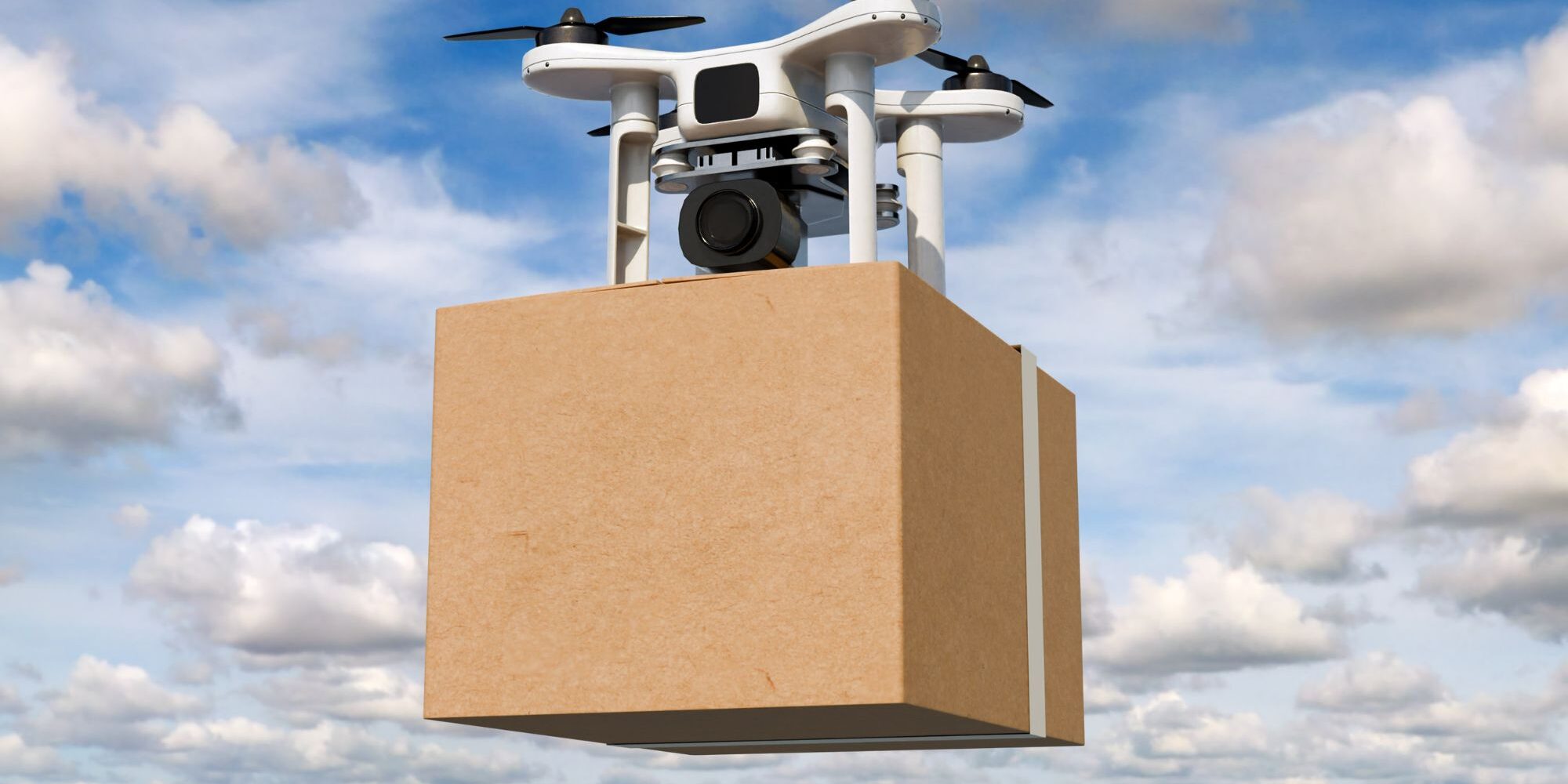
Beyond robots in warehouses, another key piece of technology used by JD to expedite the delivery process is its drones. JD first experimented with drone delivery in China in 2016. The service is intended for rural and mountainous areas where delivery times are longer than normal. Parcels leave the warehouse and are dropped at pickup points among villages where local couriers complete the very last mile. To date, the company operates on over 200 drone routes in 20 cities and has completed over 100,000 commercial deliveries, placing it below U.S. competitors like Wing and Zipline but above Amazon which has completed just 16,000 flights at the time of writing. Drones are an important piece of JD’s operations, which begs the question – will we finally see more widespread drone delivery in the UK?
There are a few things to consider:
- Strong alternatives: JD’s drone delivery programme, while successful, has been limited to rural communities that face extraordinarily long delivery windows. The UK has a strong comprehensive logistics network that spans virtually the entire country. What’s more is that it isn’t overly expensive, reducing the economic incentive, too.
- Lessons from Amazon Prime Air: Amazon’s drone delivery service, Prime Air, has already been working to crack the UK market. It first announced launch plans in 2023, noting it had a fair bit of work to do with the UK CAA to get the pilot off the ground. By late 2024, it had missed its target launch of the service to customers, though it did earn a spot with five others in a trial to test the use of drones in remote locations. This appears to have been successful and the service will become available to customers later in 2026. While positive, this case study highlights how much time it takes to get even a localised and low-risk drone delivery trial off the ground in the UK. We expect the situation to be the same for Joybuy.
- Regulatory differences: While China’s CAAC has been friendly to unmanned aircraft, Europe has been cautious to approve most drone operations, not just drone delivery as touched upon earlier. The drone corridors seen in China likely won’t be seen until 2030 or after.
- Reliance on pickup points: Analogous to this in the UK is the Amazon locker. The pickup kiosk is incorporated into everyday life in China, but for many in the UK it’s seen as inconvenient. Hence Amazon typically delivers straight to one’s doorstep despite the availability, and ease of implementation, of pickup points.
While JD’s drones might be a welcome addition among rural logistics, urban areas like London are still unlikely candidates for drone delivery, despite the entrance of an aggressive retailer with a proven system. Regulators are treading with caution, which we expect to persist for the next several years despite more and more drone operators joining the party, as safety will always trump innovation. The challenges don’t stop there, to replicate the drone delivery network the company has built in China, it will need to significantly invest in infrastructure. Without a proven market, this seems like quite a risk. We foresee the company taking a similar approach to Amazon, starting with small trials that lead to expansion when success is proven. Even at its peak, drone delivery will be a complement to other modes of transport such as trucks and vans.
In saying that, Joybuy’s strong value proposition and ability to deliver on its promises via automation will help it quickly build a customer base. So we expect that its robots will disrupt some of the delivery networks that exist today, just perhaps not the ones that fly.
To learn more about our research on drone delivery and the wider AAM market, visit The Future of Advanced Air Mobility – 2026 | Valour Consultancy.